
Login or create an account
CloseReturning Customer
I am a returning customer
Login or create an account
CloseRegister Account
If you already have an account with us, please login at the login form.
Your Account Has Been Created!
Thank you for registering with researchpeptidessale!
You will be notified by e-mail once your account has been activated by the store owner.
If you have ANY questions about the operation of this online shop, please contact the store owner.
Account Logout
You have been logged off your account. It is now safe to leave the computer.
Your shopping cart has been saved, the items inside it will be restored whenever you log back into your account.
Research Overview
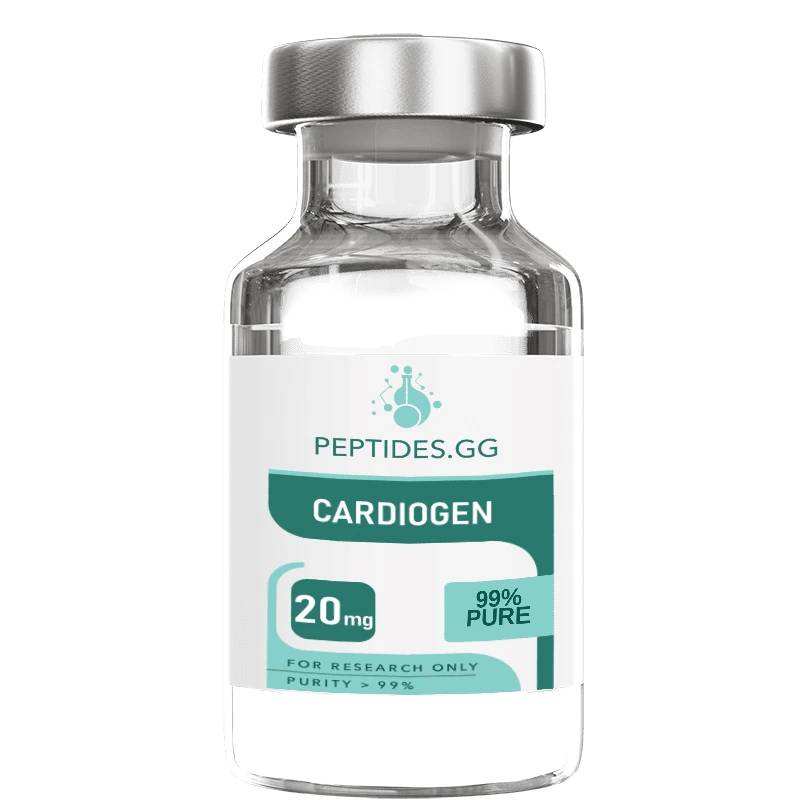
The Cardiogen peptide serves as a research tool for investigating heart-specific bioregulation and cardiac tissue function in laboratory settings. This peptide bioregulator is a synthetic short peptide (Khavinson-class) developed through research on tissue-specific regulatory mechanisms. Cardiac-focused bioregulator research complements studies using Vesugen for vascular tissue regulation and BPC-157 for cardioprotective growth factor signaling through receptor-mediated pathways. The bioregulator concept proposes that short peptides corresponding to specific organs act as information molecules that can influence cellular function in corresponding target tissues.
Cardiogen research applications extend across multiple areas of cardiovascular biology including cardiomyocyte function, cardiac energy metabolism, myocardial contractility, vascular-cardiac interactions, and cardiac aging processes. Laboratory protocols examine these effects in cell culture systems, cardiac tissue explants, and preclinical animal models to understand heart tissue regulation at molecular and cellular levels.
The peptide’s defined sequence and heart/myocardium-directed activity provide research interest in tissue selectivity and targeted cellular regulation. Studies investigate how this bioregulator peptide interacts with cardiac cells, the mechanisms underlying tissue-specific effects, and potential applications in understanding heart function and cardiovascular system biology. Research models include primary cardiomyocyte cultures, cardiac fibroblast studies, and various cardiac function assessment protocols.
Molecular Characteristics
Defined Peptide Composition:
- Classification: Synthetic peptide bioregulator (Khavinson short peptide)
- Source/Origin: Synthetic (solid-phase peptide synthesis)
- Amino Acid Sequence: Ala-Glu-Asp-Arg (AEDR)
- Molecular Formula: C₁₈H₃₁N₇O₉
- Molecular Weight: 489.48 Da
- Form: White to off-white lyophilized powder
- Solubility: Water, phosphate buffered saline, cell culture media
Cardiogen is a single, chemically defined tetrapeptide (Ala-Glu-Asp-Arg) rather than a tissue-derived material. The peptide is produced by solid-phase peptide synthesis to a defined sequence, giving consistent molecular identity from batch to batch. As a short peptide bioregulator, it is theorized to serve as an information molecule, carrying a tissue-specific regulatory signal directed toward heart/myocardium.
Short peptides of this class are proposed to influence gene expression and cellular function in target tissues. The defined four-residue sequence allows reproducible characterization and consistent supply, supporting controlled experimental comparison across laboratory models.
Bioregulator Peptide Research Background
Cardiogen belongs to the research category of cytogens (synthetic short peptide bioregulators) developed to investigate tissue-specific cellular regulation. This research approach emerged from studies on how peptide signals influence cellular differentiation, function, and tissue homeostasis. The bioregulator hypothesis proposes that:
1. Organs are associated with specific peptide signals that regulate cellular function
2. Short peptides corresponding to specific tissues demonstrate selective affinity for corresponding organs
3. These peptides may influence gene expression and protein synthesis in target cells
4. Bioregulator effects occur through interaction with cellular regulatory mechanisms
Research on heart bioregulators like Cardiogen investigates these mechanisms in cardiovascular tissue contexts, examining how peptide signals might modulate cardiac cell function, tissue repair processes, and myocardial homeostasis in experimental models.
Research Applications
Cardiomyocyte Function Research
Cardiogen serves as a research tool for investigating cardiac muscle cell function and regulation:
- Contractility Studies: Investigation of cardiomyocyte contractile force, calcium handling, and excitation-contraction coupling
- Gene Expression Research: Studies on cardiac-specific gene expression including structural proteins, ion channels, and metabolic enzymes
- Protein Synthesis Regulation: Examination of myocardial protein turnover and synthesis rates
- Cell Survival Mechanisms: Research on cardiomyocyte survival pathways, apoptosis resistance, and cellular stress responses
- Electrophysiology Studies: Investigation of ion channel expression and cardiac electrical properties
Laboratory protocols employ primary cardiomyocyte cultures (neonatal and adult), induced pluripotent stem cell-derived cardiomyocytes (iPSC-CMs), and various cardiac cell lines to characterize Cardiogen effects on cardiac muscle cell function.
Cardiac Energy Metabolism Research
Research applications extend to myocardial energy production and metabolic regulation:
- Mitochondrial Function Studies: Investigation of mitochondrial respiration, ATP production, and bioenergetics in cardiac cells
- Metabolic Substrate Utilization: Research on fatty acid oxidation, glucose metabolism, and metabolic flexibility
- Oxidative Phosphorylation Research: Examination of electron transport chain function and efficiency
- Metabolic Pathway Regulation: Studies on metabolic enzyme expression and activity in cardiac tissue
- Energy Reserve Investigation: Analysis of phosphocreatine and ATP reserves in myocardial cells
Experimental approaches include respirometry, metabolic flux analysis, and biochemical assays to understand how bioregulator peptides influence cardiac energy metabolism at cellular and molecular levels.
Cardiac Tissue Remodeling Studies
Laboratory studies investigate Cardiogen in cardiac remodeling and adaptation contexts:
- Fibroblast Regulation Research: Examination of cardiac fibroblast function, collagen production, and extracellular matrix remodeling
- Hypertrophic Response Studies: Investigation of cardiomyocyte hypertrophy signaling pathways and adaptive responses
- Matrix Metalloproteinase Research: Analysis of MMP expression and extracellular matrix turnover
- Fibrosis Development Studies: Research on pro-fibrotic signaling and collagen deposition in cardiac tissue
- Tissue Architecture Investigation: Studies on cardiac tissue organization and structural protein expression
Research protocols examine how bioregulator peptides might influence cardiac remodeling processes, fibrosis development, and tissue adaptation in cell culture and tissue models.
Cardiovascular Aging Research
Cardiogen serves as a tool for investigating age-related changes in cardiac tissue:
- Cellular Senescence Studies: Examination of aging markers in cardiomyocytes and cardiac fibroblasts
- Telomere Research: Investigation of telomere dynamics in cardiac cells
- Mitochondrial Aging: Studies on age-related mitochondrial dysfunction in myocardium
- Oxidative Stress Accumulation: Research on reactive oxygen species and oxidative damage in aging cardiac tissue
- Age-Related Function Decline: Analysis of contractile function, energy metabolism, and electrical properties in aging models
Research protocols employ aging models, senescence-associated marker analysis, and comparative studies across different age groups in experimental systems.
Cardiac Vascular Interface Research
Laboratory studies examine Cardiogen effects on cardiac-vascular interactions:
- Coronary Endothelial Function: Research on coronary endothelial cell characteristics and vasodilatory function
- Angiogenesis Studies: Investigation of cardiac vessel formation and capillary density regulation
- Vascular-Myocardial Coupling: Examination of interactions between vascular and myocardial compartments
- Microcirculation Research: Studies on cardiac microvascular perfusion and oxygen delivery
- Endothelial-Cardiomyocyte Communication: Investigation of paracrine signaling between cell types
Research approaches include endothelial cell cultures, co-culture models, and vascular function assessment in cardiac tissue preparations.
Cardiac Electrophysiology Research
Cardiogen research applications include cardiac electrical function investigation:
- Ion Channel Expression Studies: Research on cardiac sodium, potassium, and calcium channel expression
- Action Potential Analysis: Investigation of cardiomyocyte action potential characteristics and regulation
- Gap Junction Research: Studies on connexin expression and intercellular electrical coupling
- Arrhythmia Mechanism Investigation: Examination of factors influencing cardiac electrical stability
- Pacemaker Cell Function: Research on sinoatrial node cell characteristics and automaticity
Experimental models include patch-clamp electrophysiology, multi-electrode arrays, and optical mapping of cardiac electrical activity.
Laboratory Handling and Storage Protocols
Lyophilized Powder Storage:
- Store at 2-8°C (refrigerated) in original sealed vial
- Protect from light exposure and moisture
- Do not freeze lyophilized powder
- Stable for 24 months refrigerated as unopened vial
- Record receipt date for laboratory inventory
Handling Precautions:
Bioregulator peptide preparations require careful handling to maintain activity:
- Use sterile technique for cell culture applications
- Avoid prolonged exposure to room temperature
- Minimize exposure to direct light
- Use appropriate peptide-compatible labware (low-binding tubes)
- Follow standard laboratory peptide handling protocols
Quality Assurance and Analytical Testing
The analytical methods below are those commonly used to characterize and verify the identity, purity, and quality of research compounds in this class:
Identity and Sequence Analysis:
- High-Performance Liquid Chromatography (HPLC): Purity verification at ≥99%
- Mass spectrometry: Identity confirmation by ESI-MS at 489.48 Da
- Amino acid analysis: Confirms Ala-Glu-Asp-Arg composition
- Peptide content determination: Quantifies net peptide content by weight
Purity Testing:
- Chromatographic purity: ≥99% by analytical HPLC
- Related substances: Verification of low synthesis-related impurity levels
- Counterion/residual content: Acetate and related components below specified limits
Contaminant Testing:
- Bacterial endotoxin — Limulus amebocyte lysate (LAL) method
- Sterility testing: Sterile filtration and microbiological testing
- Residual solvents: Within acceptable limits
- Water content: Karl Fischer titration (<8%)
Synthesis and Specification Verification:
- Synthetic origin: Produced by solid-phase peptide synthesis to a defined sequence
- Sequence confirmation: Ala-Glu-Asp-Arg verified against specification
- Processing validation: Standardized synthesis and purification protocols
- Batch-to-batch consistency: Quality control testing across production batches
Documentation:
- Certificate of Analysis (COA) with batch-specific data
- HPLC purity chromatogram
- Mass spectrometry identity report
- Quality control test results
- Lot number traceability
Research Considerations
Experimental Design Factors:
Researchers should consider several factors when designing experiments with Cardiogen:
1. Concentration Selection: Bioregulator peptide research typically employs concentrations ranging from 0.1-10 μg/mL in cell culture studies. Optimal concentration should be determined empirically for specific experimental systems.
2. Treatment Duration: Published research suggests effects may require 24-72 hours to manifest in cell culture models. Time course studies recommended for new applications.
3. Cell Type Specificity: While directed toward heart/myocardium, tissue selectivity should be verified in each experimental system through comparative studies with other cell types.
4. Defined Peptide Considerations: As a single defined tetrapeptide, observed effects can be attributed to one molecular entity, simplifying mechanism studies relative to multi-component preparations.
5. Cardiac Cell Culture Challenges: Primary cardiomyocyte cultures require specialized conditions. Consider using iPSC-derived cardiomyocytes for reproducible long-term studies.
Control Groups:
Appropriate controls for bioregulator peptide research include:
- Vehicle control (vehicle buffer only)
- Non-specific peptide control (scrambled peptides or unrelated bioregulator)
- Positive controls where applicable (known cardiac modulators)
- Tissue-specific comparisons (same bioregulator concentration in non-cardiac cells)
Mechanism Investigation:
Cardiogen mechanisms remain active research areas. Investigated mechanisms include:
- Gene expression modulation through transcription factor regulation
- Epigenetic modifications influencing cardiac gene expression
- Cell surface receptor interactions
- Intracellular signaling pathway activation (MAPK, PI3K/Akt, etc.)
- Direct nuclear effects on chromatin and gene regulation
- Mitochondrial function modulation
Research approaches combine molecular biology techniques, genomic and proteomic analysis, cardiac functional assays, and bioenergetics measurements to elucidate bioregulator action mechanisms.
Compliance and Safety Information
Regulatory Status:
Cardiogen is provided as a research chemical for in-vitro laboratory studies and preclinical research only. This bioregulator peptide has not been approved by the FDA for human therapeutic use, dietary supplementation, or medical applications.
Intended Use:
- In-vitro cell culture research
- Cardiac tissue explant studies
- In-vivo preclinical research in approved animal models
- Laboratory investigation of cardiac tissue regulation
- Academic and institutional research applications
NOT Intended For:
- Human consumption or administration
- Therapeutic treatment or diagnosis
- Dietary supplementation
- Veterinary therapeutic applications without appropriate oversight
- Any medical or clinical applications
Safety Protocols:
Researchers should follow standard laboratory safety practices:
- Use appropriate personal protective equipment (lab coat, gloves, safety glasses)
- Handle in biosafety cabinet for sterile work
- Follow institutional biosafety guidelines
- Dispose of waste according to laboratory waste protocols
- Consult material safety data sheet (MSDS) for additional information
Material Source Considerations:
Cardiogen is a synthetic peptide produced by solid-phase peptide synthesis and is not derived from animal tissue. Researchers should:
- Follow institutional synthetic peptide handling guidelines
- Maintain records of Certificate of Analysis and specification documentation
- Verify lot identity and purity against batch records
- Apply appropriate biosafety practices for laboratory research chemicals
—