

Login or create an account
CloseReturning Customer
I am a returning customer
Login or create an account
CloseRegister Account
If you already have an account with us, please login at the login form.
Your Account Has Been Created!
Thank you for registering with researchpeptidessale!
You will be notified by e-mail once your account has been activated by the store owner.
If you have ANY questions about the operation of this online shop, please contact the store owner.
Account Logout
You have been logged off your account. It is now safe to leave the computer.
Your shopping cart has been saved, the items inside it will be restored whenever you log back into your account.
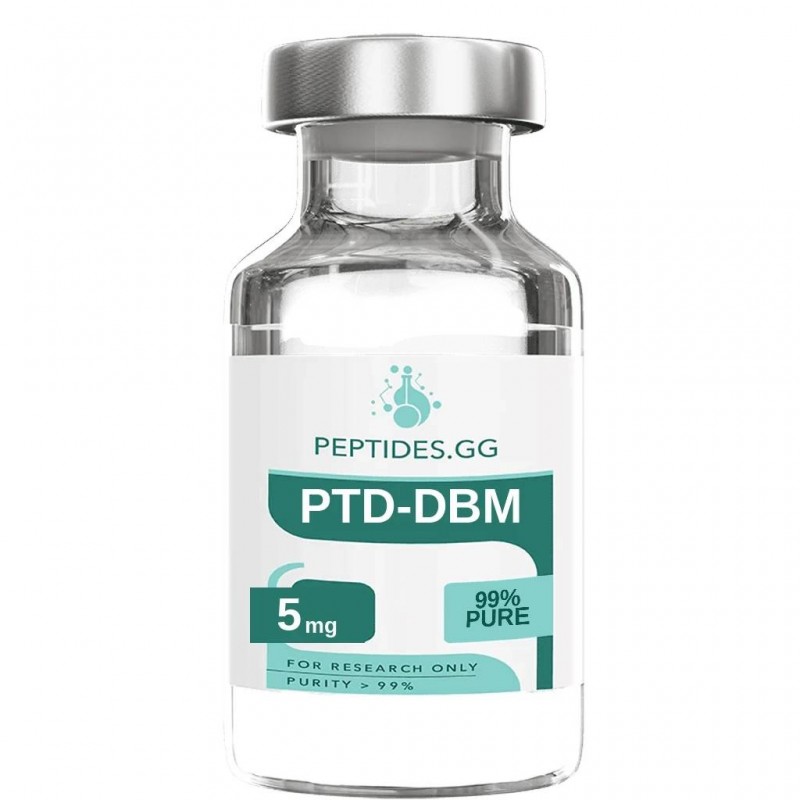
Research Overview
The PTD-DBM peptide (Protein-Transduction-Domain–Dishevelled-Binding Motif) is a synthetic cell-penetrating peptide developed as a research tool for modulating Wnt/β-catenin signaling. It fuses a polyarginine protein-transduction domain — which carries the peptide across cell membranes — to a Dishevelled-binding motif that competitively disrupts the interaction between the protein CXXC5 and Dishevelled (Dvl).
Structure and Mechanism
The peptide comprises three parts: a polyarginine cell-penetrating segment, a tetraglycine linker, and the Dishevelled-binding motif (full sequence R₈-GGGG-RKTGHQICKFRKC). CXXC5 functions as a negative-feedback regulator of Wnt/β-catenin signaling by binding Dishevelled; by occupying that protein–protein interface, PTD-DBM relieves the CXXC5-mediated inhibition and allows Wnt signaling to proceed. This competitive-disruption mechanism is the basis for its use as a research tool in tissue-regeneration models.
Research Applications
In published preclinical (rodent) research, PTD-DBM has been investigated for hair-follicle neogenesis and wound-healing models, contexts in which Wnt/β-catenin activation plays a central role. It is used alongside other dermatological-research compounds such as RU-58841 in comparative laboratory work.
Laboratory Handling
PTD-DBM is supplied as a lyophilized powder. The peptide contains two cysteine residues, so the disulfide state (reduced free-thiol versus oxidized) should be noted when characterizing material. The powder is kept sealed, cold, and protected from light and moisture until use. Each batch is third-party tested with a Certificate of Analysis.